
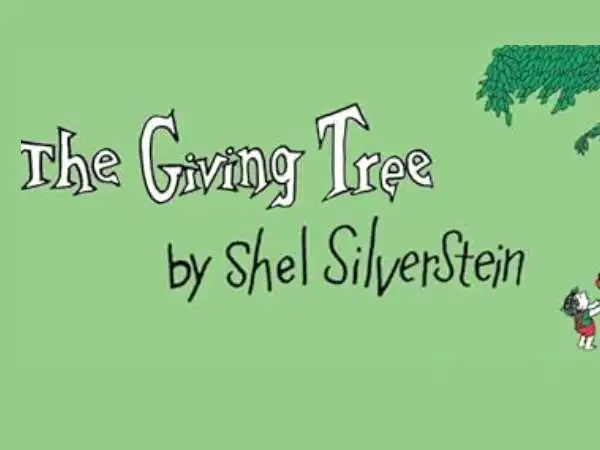
The phrase giving tree silverstein looks harmless. Almost gentle. People remember it as a children’s book, something read at bedtime, something sweet. Then they read it again as adults and feel uncomfortable. Quiet. Maybe even sad.

That reaction isn’t accidental.
The Giving Tree, written and illustrated by Shel Silverstein, is one of the most discussed picture books ever published. Not because it explains itself clearly, but because it refuses to. It leaves readers alone with questions about love, sacrifice, need, and what we take from others without ever saying thank you.
This blog takes the long way through the book. We’ll look at its origin, its images, its poem-like structure, its meaning, the author behind it, and why a book published in 1964 still divides readers today.
The Giving Tree Shel Silverstein 1964: Where It All Began
The Giving Tree Silverstein 1964 marks the book’s first publication year. When it arrived, it didn’t look like most children’s books of its time. There was no bright color palette. No moral spelled out in bold letters. The illustrations were sparse. The text was quiet.
The book told the story of a boy and a tree across an entire lifetime. Childhood. Adolescence. Adulthood. Old age. The tree gives. The boy takes. Again and again.
At the time, reactions were mixed. Some saw it as a story of unconditional love. Others felt uneasy even then. That tension never went away.
Also Read : – Fossilized Dino: What It Is, How It Works, and Why Players Keep Getting Stuck
Who Was Shel Silverstein Before The Giving Tree
Before The Giving Tree, Shel Silverstein was already a successful creative figure. He worked as a cartoonist, songwriter, poet, and illustrator. He wrote humorous, sharp-edged content that often carried adult undertones beneath playful surfaces.
That background matters. Silverstein didn’t write down to children. He trusted them to feel complexity, even if they couldn’t name it yet.
His style leaned toward:
- Minimal language
- Expressive line drawings
- Emotional ambiguity
The Giving Tree fits perfectly into that philosophy.
Giving Tree Shel Silverstein Summary (Without Softening It)
Many summaries soften the story. This one won’t.
A boy loves a tree. The tree loves the boy. As the boy grows older, he visits less. When he does return, he asks for things. Apples. Branches. Trunk. Each time, the tree gives without hesitation.
The boy uses what he takes to build a life elsewhere.
In old age, the boy returns with nothing left to ask for. The tree has nothing left to give except a stump. The boy sits. The tree is “happy.”
That’s the entire story. No lesson spelled out. No correction. No redemption scene.
And that silence is what unsettles readers.
Giving Tree Shel Silverstein Meaning: Why Readers Disagree
The search term giving tree shel silverstein meaning exists because the book refuses to answer its own questions.
Some readers see:
- Parental love
- Selfless giving
- Devotion without condition
Others see:
- Exploitation
- One-sided relationships
- Emotional imbalance
Both interpretations come directly from the text. That’s intentional.
Silverstein never clarified his intent. He once said he preferred readers to argue. The discomfort means the book is working.
Also Read : – Apps for adding Filters to Videos : Best apps for Video Editing for Android and iOS
Is The Giving Tree About Parenting
Many parents read the tree as a symbol of motherhood or fatherhood. The idea of giving everything to a child, even at personal cost, resonates deeply.
But the book never names the relationship. That absence matters. It allows the story to apply to many dynamics:
- Parent and child
- Romantic partners
- Friends
- Society and nature
Each reader brings their own context.
Is The Giving Tree About Toxic Giving
Another interpretation frames the story as a warning. Giving without boundaries destroys the giver. The tree never says no. The boy never reflects.
In this reading, the final image of the stump is not peaceful. It’s tragic.
That interpretation has grown more popular in recent decades, especially as conversations about boundaries and emotional labor become more open.
Why The Book Feels Different at Different Ages
Children often see the surface story. They feel the love. The repetition. The rhythm.
Adults see time passing. They feel regret. They notice imbalance.
The book doesn’t change. The reader does.
That’s one reason it endures.
Giving Tree Shel Silverstein Poem: Why It Reads Like One
Many people search giving tree shel silverstein poem because the book reads like verse even though it’s categorized as prose.
Short lines. Simple sentences. Repetition. White space.
The structure slows the reader down. It forces pauses. Those pauses carry weight.
Silverstein used poetic techniques to make silence speak.
Also Read : – Free AARP Games: A Fun Way to Keep Your Brain Sharp and Enjoy Your Time
The Role of Illustrations in The Giving Tree
The giving tree shel silverstein picture style is unmistakable. Black ink lines. Minimal detail. Expressive faces.
The tree is never overly detailed. The boy is never heavily described. This simplicity makes the emotion universal.
The pictures don’t distract. They guide.
Each image mirrors the emotional state of the text without explaining it.
Giving Tree Shel Silverstein Photo vs Illustration
Searches for giving tree shel silverstein photo often confuse two things:
- Photos of Silverstein himself
- Illustrations from the book
Silverstein rarely appeared in formal author photos. He preferred to let his work speak. The illustrations remain the primary visual identity of the book.
That choice adds to its timeless feel.
Why The Giving Tree Was Controversial in Schools
Some schools embraced the book. Others removed it.
Critics argued it promoted unhealthy self-sacrifice. Supporters argued it reflected real emotional complexity.
The fact that a children’s book sparked serious debate speaks to its depth.
It doesn’t tell children what to think. It shows them something and walks away.
Giving Tree Author Silverstein Crossword and Pop Culture
The phrase giving tree author silverstein crossword appears often because the book is deeply embedded in cultural memory. It’s referenced in puzzles, classrooms, and conversations.
Few children’s books reach that level of recognition.
The title alone triggers an emotional response.
Also Read : – How to Charter a Helicopter for a VIP Shopping Trip?
The Giving Tree Shel Silverstein Picture as Symbol
The final image of the stump stays with readers. It’s simple. Stark. Quiet.
That image does more work than pages of explanation ever could.
Is the tree content? Or resigned? Is the boy peaceful? Or empty?
The book never answers.
Environmental Readings of The Giving Tree
Some readers interpret the book as a story about nature and humanity. The tree gives resources. Humans take. Eventually, nothing remains.
This reading feels increasingly relevant in modern environmental discussions.
Again, Silverstein never confirms it. He lets readers connect the dots.
Why Silverstein Refused to Explain Himself
Shel Silverstein disliked over-analysis. He trusted intuition. He believed stories should live inside readers, not come with instruction manuals.
That refusal frustrates some people. It frees others.
It’s part of why the book still feels alive.
The Giving Tree and Modern Parenting Debates
Today, the book often appears in conversations about:
- Burnout
- Emotional boundaries
- Caregiver fatigue
Parents revisit it and see their own exhaustion reflected in the tree.
That wasn’t part of 1964 culture. It is part of today’s.
Why Some People Hate The Giving Tree
Hatred often comes from recognition. The book exposes uncomfortable truths.
It doesn’t reward the giver. It doesn’t punish the taker. It simply observes.
That neutrality feels harsh.
Why Others Love It Deeply
For others, the book reflects love without conditions. A love that doesn’t ask to be repaid.
Both readings can coexist. That’s the point.
Also Read : – Quillbot Alternative: Know the Best Alternatives to Quillbot Here
Shel Silverstein’s Legacy Beyond The Giving Tree
Silverstein wrote many beloved works, but none sparked debate like this one. The Giving Tree became a mirror people couldn’t stop looking into.
That legacy speaks to its power.
FAQs
Who wrote The Giving Tree
The Giving Tree Shel Silverstein summary
A boy takes from a loving tree across his life until only a stump remains.
What does The Giving Tree mean
It has no single meaning; interpretations vary.
Was The Giving Tree published in 1964
Yes.
Is The Giving Tree a poem
It reads poetically but is classified as a picture book.
Final Words
The Giving Tree Silverstein endures because it refuses comfort. It doesn’t tell readers how to feel. It doesn’t rescue the story at the end. It trusts silence. That trust is rare. Whether you see the tree as loving, tragic, or both at once, the book does its job. It stays with you. Long after the last page.
