
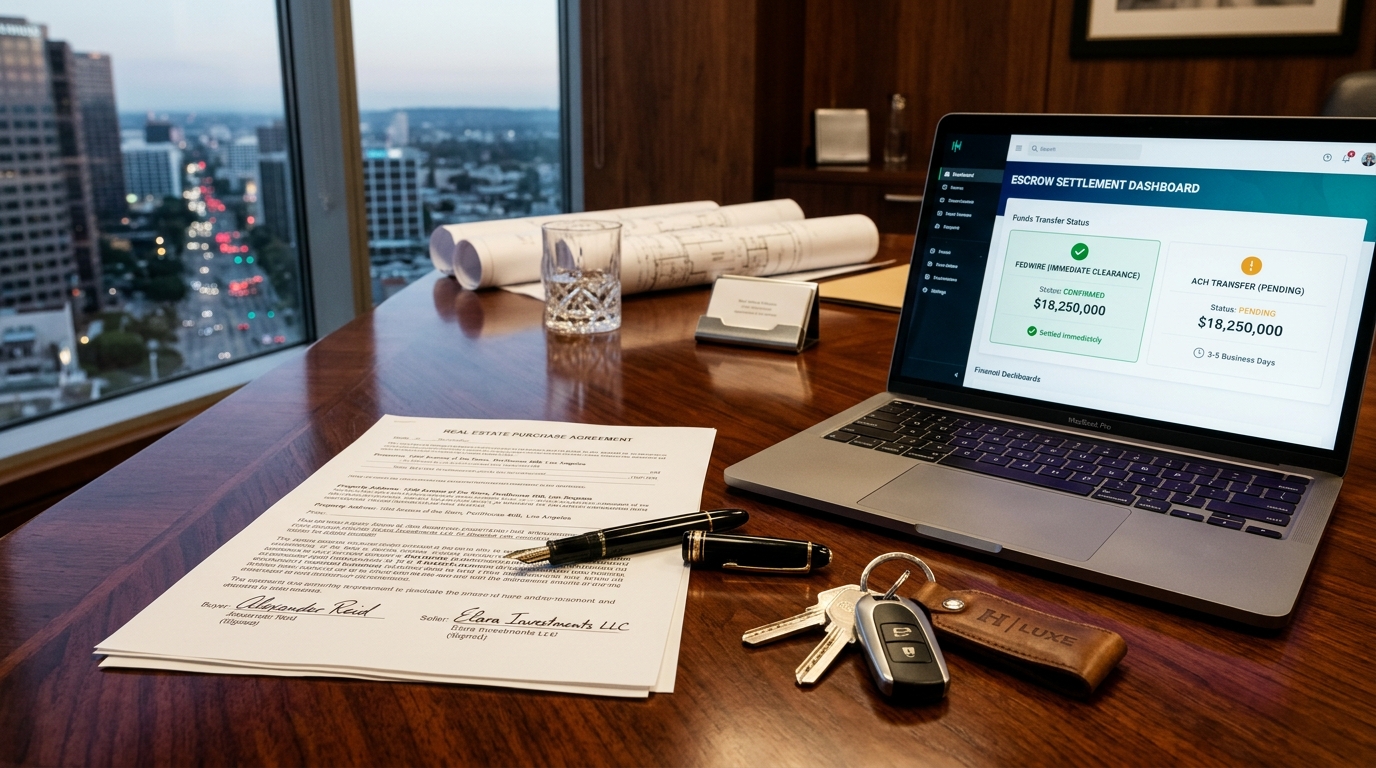
Wire transfers are the mandatory industry standard for real estate earnest money deposits because they settle on the same business day and are contractually irrevocable once confirmed on the Fedwire network. In contrast, Automated Clearing House (ACH) transfers process in commercial batches over 1 to 3 business days and carry a 60-day dispute and clawback window under Nacha operating rules. Because purchase contracts typically enforce strict 24- to 48-hour earnest money deadlines, title and escrow companies routinely reject ACH deposits to prevent contractual defaults and buyer clawback risks.
However, the absolute finality that makes wire transfers attractive to escrow officers also makes them the primary target for cybercriminals through Business Email Compromise (BEC) and wire fraud. If a homebuyer wires funds to a fraudulent routing number following a spoofed email, the capital is immediately unrecoverable. Below is the complete risk-adjusted breakdown of wire transfers vs. ACH for real estate earnest money, including contract compliance rules, title company requirements, and strict anti-fraud verification protocols.
Key Operational Verdict
- Title Company Standard: Wire Transfer is virtually always required for earnest money ($1,000 to $50,000+) and final closing funds.
- Velocity Advantage: Wires clear in 1 to 3 hours on business days; ACH requires 24 to 72 hours.
- Legal Finality: Wires are irrevocable upon receipt; ACH is reversible via banking disputes.
- Golden Anti-Fraud Rule: Always perform out-of-band verbal phone verification of wiring instructions using an independently verified title office phone number before sending money.
What Is Earnest Money and Why Does Settlement Speed Matter?
An earnest money deposit (EMD)—often called a “good faith deposit”—is an upfront cash commitment submitted by the buyer to demonstrate serious purchase intent. Typically representing 1% to 3% of the purchase price (and up to 5% to 10% in highly competitive metropolitan markets), earnest money is held in a neutral third-party escrow or trust account managed by a title company, real estate brokerage, or settlement attorney.
Residential purchase agreements impose rigid time-of-the-essence delivery clauses. Most state-standard purchase contracts mandate that the buyer deposit earnest money into escrow within 48 to 72 hours of contract execution. If your payment rail experiences multi-day clearing lag, the seller holds the legal right to declare the contract in breach, terminate the agreement, and accept a competing backup offer.
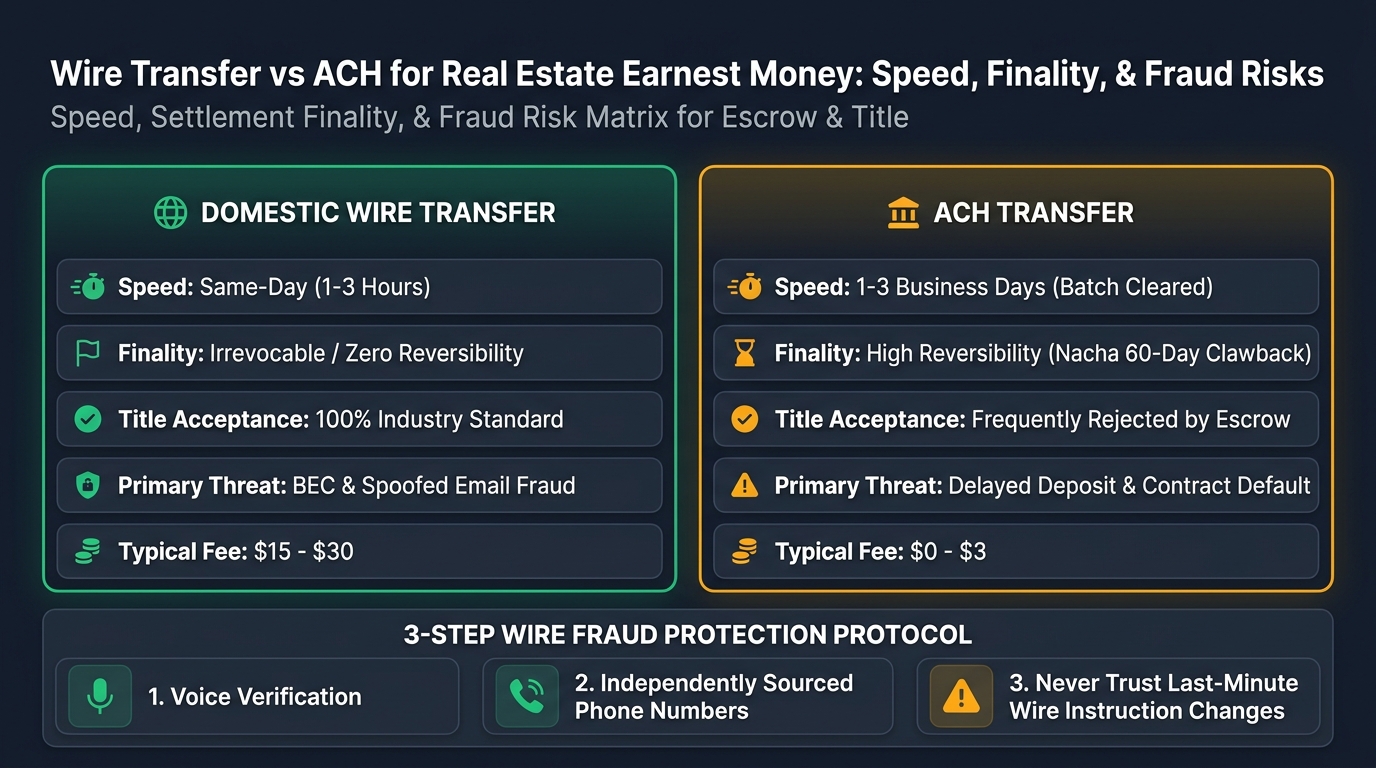
Figure 1: Comparative breakdown of Wire Transfers vs. ACH across speed, legal finality, cost, and fraud exposure.
Wire Transfer vs. ACH: The Core Technical Differences
Understanding why title companies strongly favor one rail over the other requires examining their underlying settlement architecture.
| Transaction Variable | Domestic Wire Transfer | Automated Clearing House (ACH) |
|---|---|---|
| Clearing Network | Fedwire / Clearing House Interbank (CHIPS) | Nacha Net-Batch Network |
| Settlement Velocity | Same-day (1 to 3 hours) | 1 to 3 business days (Batch cycles) |
| Payment Finality | Irrevocable upon receipt | Reversible via banking disputes |
| Title Company Acceptance | Universally mandatory standard | Frequently rejected or restricted |
| Typical Cost | $15 to $35 outgoing bank fee | Free or nominal fee ($0 to $3) |
| Primary Vulnerability | Email spoofing / Wire fraud loss | Contract default due to settlement delay |
Why Title Companies Reject ACH for Earnest Money
Title and escrow agencies operate under strict fiduciary liabilities and state insurance department regulations. They require “good funds” before issuing title insurance commitments or proceeding toward closing milestones.
The fundamental liability of ACH transfers is reversibility. Under federal banking regulations (Regulation E) and Nacha rules, an account holder can dispute an unauthorized ACH transfer or claim processing error up to 60 calendar days after the settlement date. If a buyer experiences buyer’s remorse, issues an unauthorized dispute with their bank, and claws back their $25,000 earnest money deposit from the escrow trust account, the title company is left with an illegal trust ledger deficit.
Because domestic wire transfers settle as immediate, gross interbank settlements, the sending bank cannot unilaterally reverse or recall the transfer once credited to the beneficiary. This legal finality protects both the escrow officer and the property seller.
The Critical Threat: Real Estate Wire Fraud and BEC Scams
The irreversible nature of wire transfers creates a massive vulnerability that cybercriminals exploit every day. According to FBI Internet Crime Complaint Center (IC3) reports, real estate wire fraud accounts for hundreds of millions of dollars in catastrophic consumer losses annually.
In a typical Business Email Compromise (BEC) scheme, hackers monitor unencrypted email communications between the buyer, their real estate agent, and the title company. Shortly before the earnest money or closing deadline, the fraudster sends an urgent, spoofed email mimicking the escrow officer, claiming:
"URGENT: Our primary escrow trust account at Wells Fargo is undergoing an internal audit. Please wire your $25,000 earnest money deposit to our secondary settlement clearing account at Chase Bank immediately using the attached routing instructions to avoid contract cancellation."
The victim initiates the wire transfer at their bank branch or online portal. Because wire transfers settle in minutes and are permanent, the hacker immediately siphons the capital through mule accounts or converts it into cryptocurrency. In virtually all cases, the sending bank will not reimburse the lost funds because the customer authorized the transaction.
The 4-Step Bulletproof Wire Security Protocol
To safely execute your earnest money wire transfer without falling prey to interception schemes, strictly execute these four operational defenses:
- Never Trust Wiring Details in an Email: Treat every email containing routing or account numbers as compromised until proven otherwise. Real estate title companies almost never change wiring instructions mid-transaction.
- Perform Verbal Out-of-Band Verification: Before authorizing the wire at your bank, call your designated title or escrow officer to read and confirm every digit of the routing number, account number, and beneficiary entity name.
- Use Independently Sourced Phone Numbers: Never call the phone number printed inside the email containing the wire instructions. Locate the title company’s official office phone number from original physical paperwork, a verified Google Business profile, or your real estate agent’s verified contact card.
- Leverage Secure Escrow Portals: When available, access wire instructions exclusively through encrypted closing platforms (such as CertifID, Qualia, or Earnnest) that mandate multi-factor biometric authentication.
For investors and homeowners evaluating property transaction dynamics and capital allocation, reviewing our operational guide on commercial vs residential real estate investing provides strategic portfolio management depth.
Frequently Asked Questions (FAQ)
-
Can I pay earnest money with an ACH transfer instead of a wire?
Most title and escrow companies strictly prohibit ACH transfers for earnest money deposits. ACH transfers take 1 to 3 business days to clear and are legally reversible for up to 60 days, creating unacceptable contractual default and escrow liability risks.
-
How long does an earnest money wire transfer take to clear?
A domestic wire transfer typically clears and settles within 1 to 3 hours on standard business days. Provided you initiate the transfer before your commercial bank’s daily cutoff time (typically 2:00 PM to 4:00 PM local time), funds credit to escrow on the same day.
-
Can a wire transfer for earnest money be reversed if sent to the wrong account?
No, wire transfers are legally final and irreversible once settled on the Fedwire network. If you transfer funds to a fraudulent account, the sending bank cannot recall the capital without the receiving party’s explicit cooperation, making verbal phone verification critical before sending.
-
Are certified cashier’s checks an acceptable alternative to wire transfers?
Yes, many title companies accept certified cashier’s checks drawn on local bank branches as an alternative to wire transfers. However, the check must be hand-delivered to the escrow office, and out-of-area banks may still impose a 24- to 48-hour verification hold.
